

Griffith University expert from Australia, Prof. Prasad Kaparaju, while delivering a public lecture at Manado State Polytechnic (Polimdo) on Monday (16/11/2026).
Manado, Kawanuainfo.com – Komitmen Politeknik Negeri Manado (Polimdo) dalam memperluas jejaring riset internasional di bidang teknologi ramah lingkungan kembali diwujudkan lewat forum akademik berskala global. Bekerja sama dengan Tim Penelitian KONEKSI (Kolaborasi untuk Pengetahuan, Inovasi, dan Teknologi Australia-Indonesia), kampus vokasi ini menggelar kuliah umum bersama pakar asal Griffith University, Australia, Prof. Prasad Kaparaju.
Manado State Polytechnic’s (Polimdo) commitment to expanding its international research network in environmentally friendly technology has been realized once again through a global-scale academic forum. In collaboration with the KONEKSI Research Team (Collaboration for Knowledge, Innovation, and Technology Australia-Indonesia), this vocational campus held a public lecture featuring an expert from Griffith University, Australia, Prof. Prasad Kaparaju.
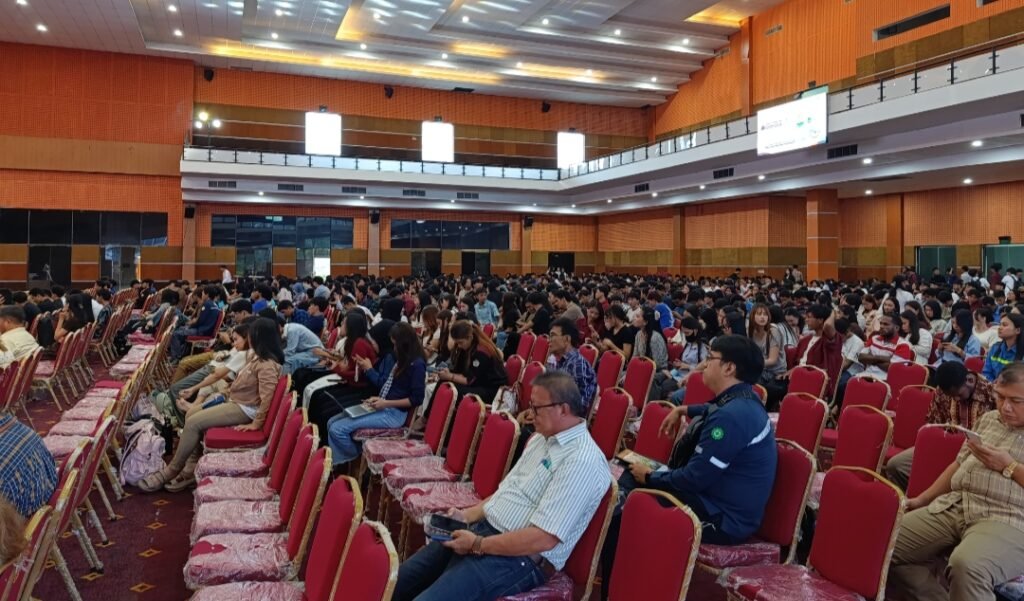
Dalam kuliah umum yang dipadati mahasiswa tersebut, Prof. Kaparaju menyoroti persoalan krusial dan menantang di wilayah Sulawesi, khususnya Kota Manado, yakni pengelolaan sampah plastik. Ia menegaskan bahwa sampah seharusnya tidak dipandang sebagai akhir dari siklus hidup suatu produk, melainkan awal dari terciptanya sumber daya baru.
In the student-packed public lecture, Prof. Kaparaju highlighted a crucial and challenging issue in the Sulawesi region, particularly Manado City, namely plastic waste management. He emphasized that waste should not be viewed as the end of a product’s life cycle, but rather as the beginning of the creation of new resources.
”Sampah pada dasarnya hanyalah sesuatu yang berada di tempat, waktu, dan konteks yang salah. Materi yang saat ini tidak berguna bagi satu orang, bisa menjadi sangat bermanfaat bagi orang lain,” ujar Prof. Kaparaju, Senin (16/11/2026).
”Waste is essentially just something in the wrong place, at the wrong time, and in the wrong context. Material that is currently useless to one person can be very useful to another,” said Prof. Kaparaju on Monday (16/11/2026).
Ia pun mengapresiasi tinggi antusiasme mahasiswa Polimdo yang dinilainya sebagai audiens paling bersemangat sepanjang pengalamannya memberikan kuliah. Tak lupa, akademisi dari universitas peringkat kedua dunia dalam bidang keberlanjutan (sustainability) itu menyampaikan terima kasih kepada rekan-rekan kolaboratornya di proyek KONEKSI.
He also highly appreciated the enthusiasm of Polimdo students, whom he considered to be the most enthusiastic audience throughout his lecturing experience. Furthermore, the academic from the world’s second-ranked university in sustainability expressed his gratitude to his fellow collaborators in the KONEKSI project.
Dalam pemaparannya, Prof. Kaparaju mengungkapkan tantangan besar pengelolaan sampah di negara berkembang seperti Indonesia. Setiap individu di Indonesia rata-rata menghasilkan sekitar 200 kilogram sampah per tahun. Sayangnya, sampah dari rumah tangga maupun industri umumnya tidak dipilah dari sumbernya, melainkan langsung diangkut menuju tempat pembuangan akhir (TPA) terbuka (open dump sites).
In his presentation, Prof. Kaparaju revealed the major challenges of waste management in developing countries like Indonesia. Every individual in Indonesia generates an average of about 200 kilograms of waste per year. Unfortunately, waste from both households and industries is generally not sorted at the source, but is instead transported directly to open dump sites.
Menurut dia, praktik penimbunan terbuka tersebut sangat tidak berkelanjutan karena harga lahan yang semakin mahal dan terbatas. Terlebih lagi, sekitar 60 persen dari komposisi sampah di Indonesia merupakan sampah organik yang langsung membusuk di TPA.
According to him, this open dumping practice is highly unsustainable due to increasingly expensive and limited land prices. Moreover, around 60 percent of the waste composition in Indonesia consists of organic waste that decays directly in landfills.
”Pembusukan sampah organik ini melepaskan gas rumah kaca seperti metana dan karbon dioksida yang berdampak langsung pada pemanasan global dan perubahan iklim. Selain itu, pengelolaan sampah yang buruk memicu masalah kesehatan masyarakat akibat bau tak sedap, emisi, hingga berkembangnya serangga pembawa penyakit seperti malaria,” jelasnya.
”The decomposition of this organic waste releases greenhouse gases such as methane and carbon dioxide, which have a direct impact on global warming and climate change. In addition, poor waste management triggers public health problems due to unpleasant odors, emissions, and the proliferation of disease-carrying insects such as malaria,” he explained.
Untuk mengatasi persoalan tersebut, Prof. Kaparaju menekankan pentingnya penerapan sistem pengelolaan sampah terpadu (integrated waste management) berbasis ekonomi sirkular. Langkah paling krusial dimulai dari pemilahan sampah langsung di tingkat rumah tangga (source separation).
To address these issues, Prof. Kaparaju emphasized the importance of implementing an integrated waste management system based on a circular economy. The most crucial step begins with source separation at the household level.
Sampah yang telah dipilah, mulai dari sampah organik, botol plastik, kaleng minuman, hingga botol kaca yang 100 persen dapat didaur ulang, kemudian dibawa oleh armada truk pengangkut yang dikontrak pemerintah daerah menuju fasilitas pemulihan material (recovery facilities).
The sorted waste ranging from organic waste, plastic bottles, beverage cans, to 100 percent recyclable glass bottles is then transported by local government-contracted truck fleets to material recovery facilities.
Di fasilitas tersebut, sampah diproses melalui berbagai tahapan teknologi modern, meliputi: Memotong material sampah menjadi ukuran kecil untuk memudahkan proses lanjutan. Selanjutnya, memilah material berdasarkan aliran udara dan memisahkan material logam hingga besi secara otomatis, dan terakhir menggunakan sensor optik canggih untuk memisahkan fraksi sampah secara spesifik agar memiliki nilai jual di pasar.
At these facilities, the waste is processed through various modern technological stages, including: cutting waste materials into small sizes to facilitate subsequent processes. Next, sorting materials based on airflow and automatically separating ferrous and non-ferrous metals, and finally using advanced optical sensors to separate specific waste fractions so they hold market value.
Melalui sistem ini, hanya residu sampah yang benar-benar tidak dapat diolah lagi yang dikirim ke TPA. Hal ini secara signifikan menekan volume timbunan sekaligus menghemat biaya pembuangan (tipping fee), yang di negara seperti Australia mencapai US$ 120 hingga US$ 180 per ton.
Through this system, only waste residues that truly cannot be processed any further are sent to landfills. This significantly reduces the volume of accumulated waste while saving on tipping fees, which in countries like Australia reach US$ 120 to US$ 180 per ton.
Lebih jauh, sampah organik yang terpisah dapat diolah menjadi energi terbarukan berupa biogas untuk pembangkit listrik mandiri di lokasi pengolahan (on-site). Transformasi industri pengelolaan sampah ini diyakini mampu membuka peluang terciptanya lapangan kerja hijau (green jobs) sekaligus mewariskan lingkungan yang lestari bagi generasi mendatang.
Furthermore, the separated organic waste can be processed into renewable energy in the form of biogas for independent on-site power generation. This transformation of the waste management industry is believed to open opportunities for creating green jobs while leaving a sustainable environment for future generations.
Penulis : Candle Heiner Rogaga.






Tinggalkan Balasan